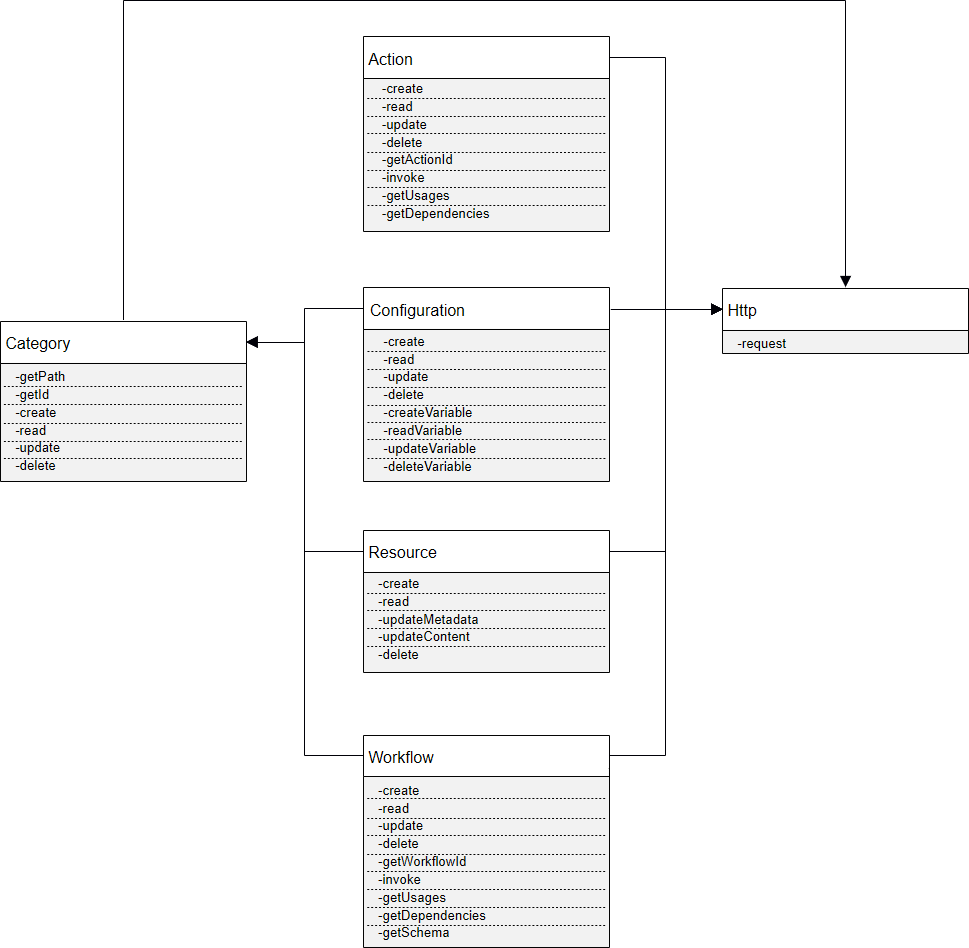
How do you bridge the gap between the enterprise world of VCF Automation and Python development? The answer is a well-designed class hierarchy. By mapping HTTP communication, metadata and execution logic into Python objects, we transform the Orchestrator into an efficient, programmable interface for developers. This post introduces a base class architecture covering everything developers need in their day-to-day engineering work: from managing code and core logic like actions and workflows to data assets like configuration and resource elements, including their folder structure via categories.
Class Hierarchy for Python Runtime Environment
Here the design of the class hierarchy. The following core classes form the foundation of the architecture - as can be seen in the diagram below:- Http Class ‐ Acts as the fundamental communication layer for all HTTP requests.
- Category Class ‐ Organizes workflows, configuration and resource elements into a folder tree.
- Action Class ‐ Handles the lifecycle and execution of individual actions.
- Workflow Class ‐ Manages workflow definitions and triggers execution processes.
- Configuration Element Class ‐ Provides control over environment variables and configuration data.
- Resource Element Class ‐ Manages external files and assets linked within the Orchestrator.